The OpenFlexure microscope in educational settings
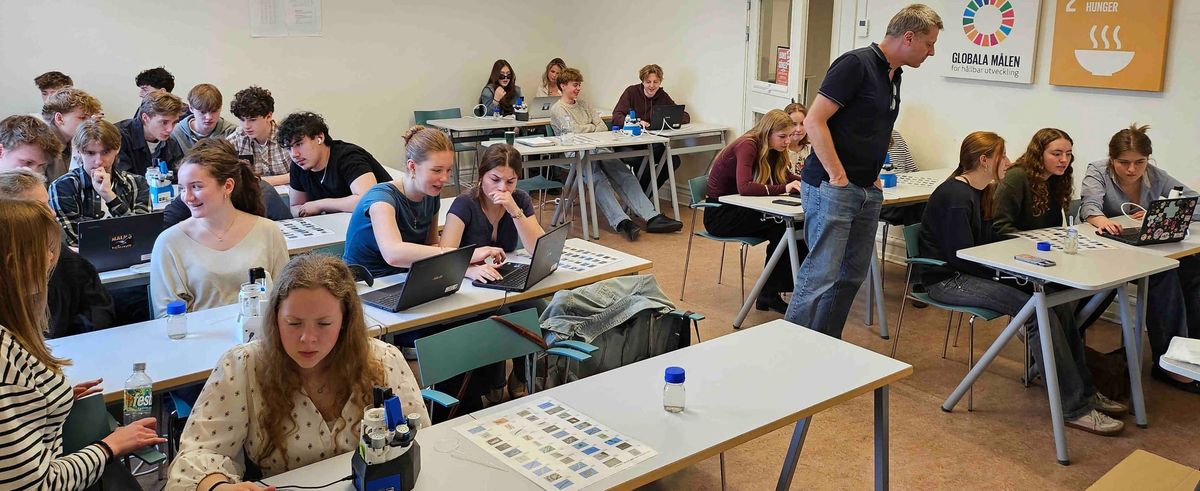
The OpenFlexure microscope (OFM) has already been established as a technology of the future being featured in the "WHO compendium of innovative health technologies for low-resource settings" (page 69). There are multiple other fields, areas and settings where an increased accessibility to microscopy is of great benefit. One of them is the educational setting and in the school classroom itself, a setting unfortunately relying on limited resources.
Through my company (PKI Utveckling AB) I work towards bridging the gap between the environmentally interested and environmental research participation. Using contemporary technologies, such as the OFM, I want to enable for more people to engage in environmental monitoring activities while also raise awareness towards biodiversity research, environmental monitoring, open science and open hardware.
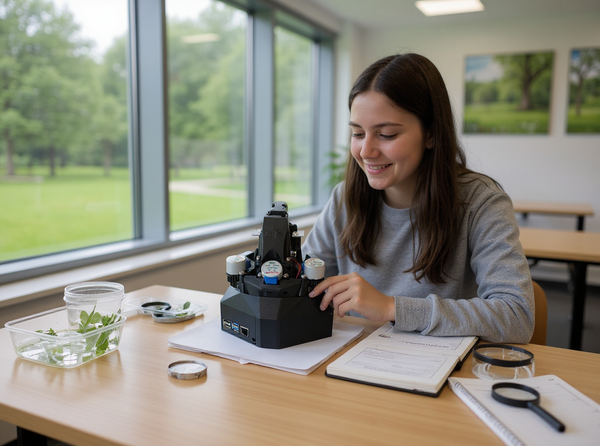
This has given me the opportunity to engage with teachers and students and see first hand how the OFM elevates education. In this post I want to share some of my recent experiences working with the OFM in educational settings (secondary school class rooms and outdoor educational events).
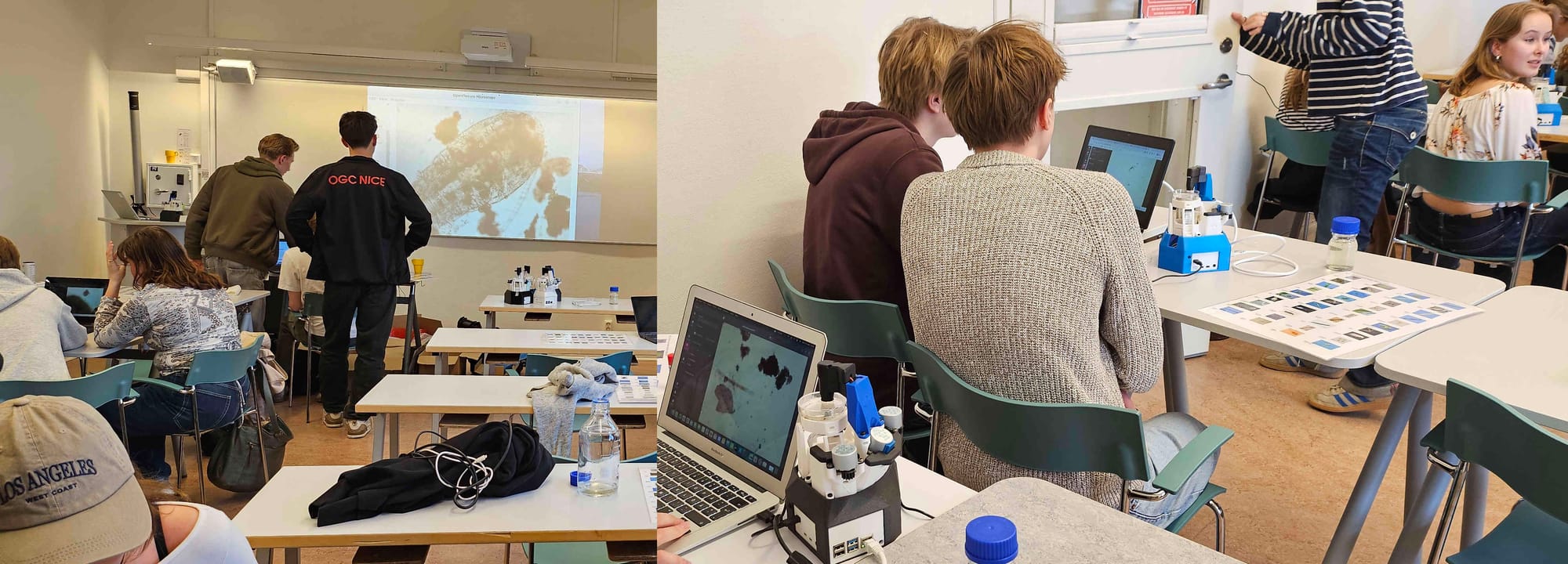
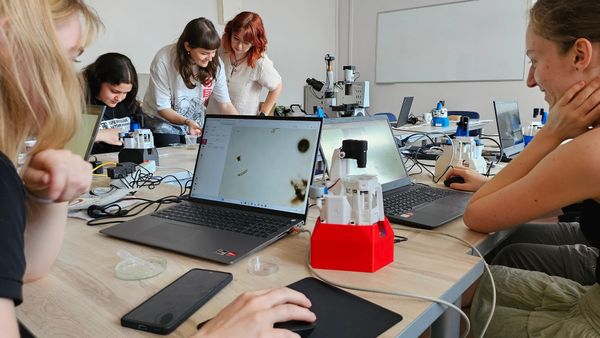
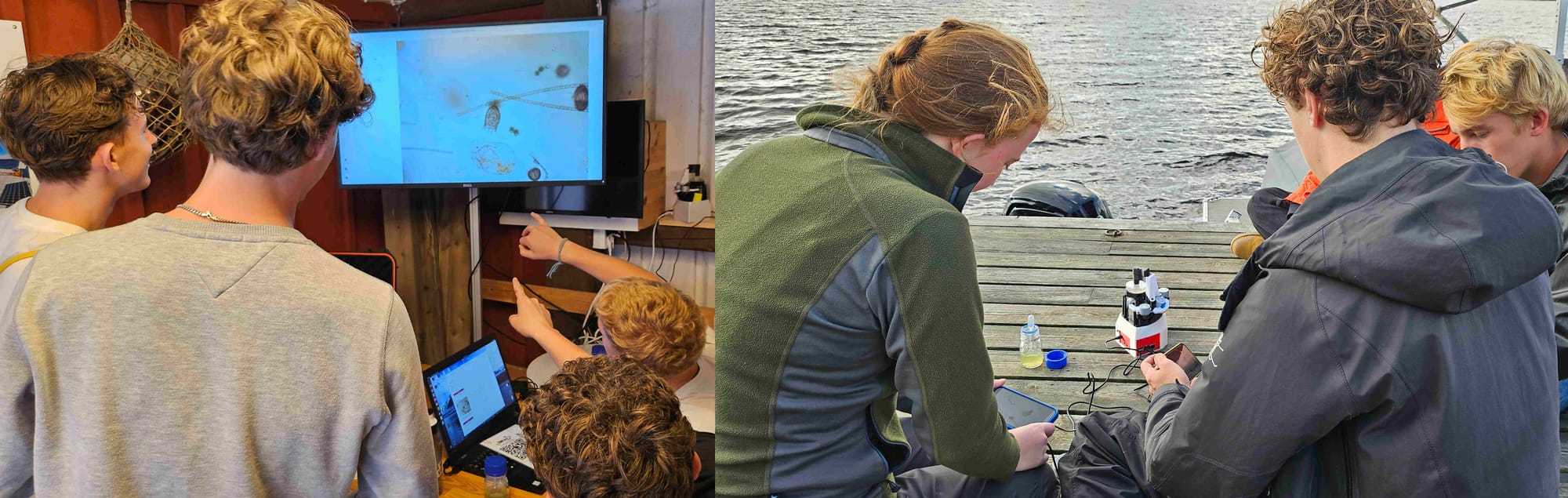
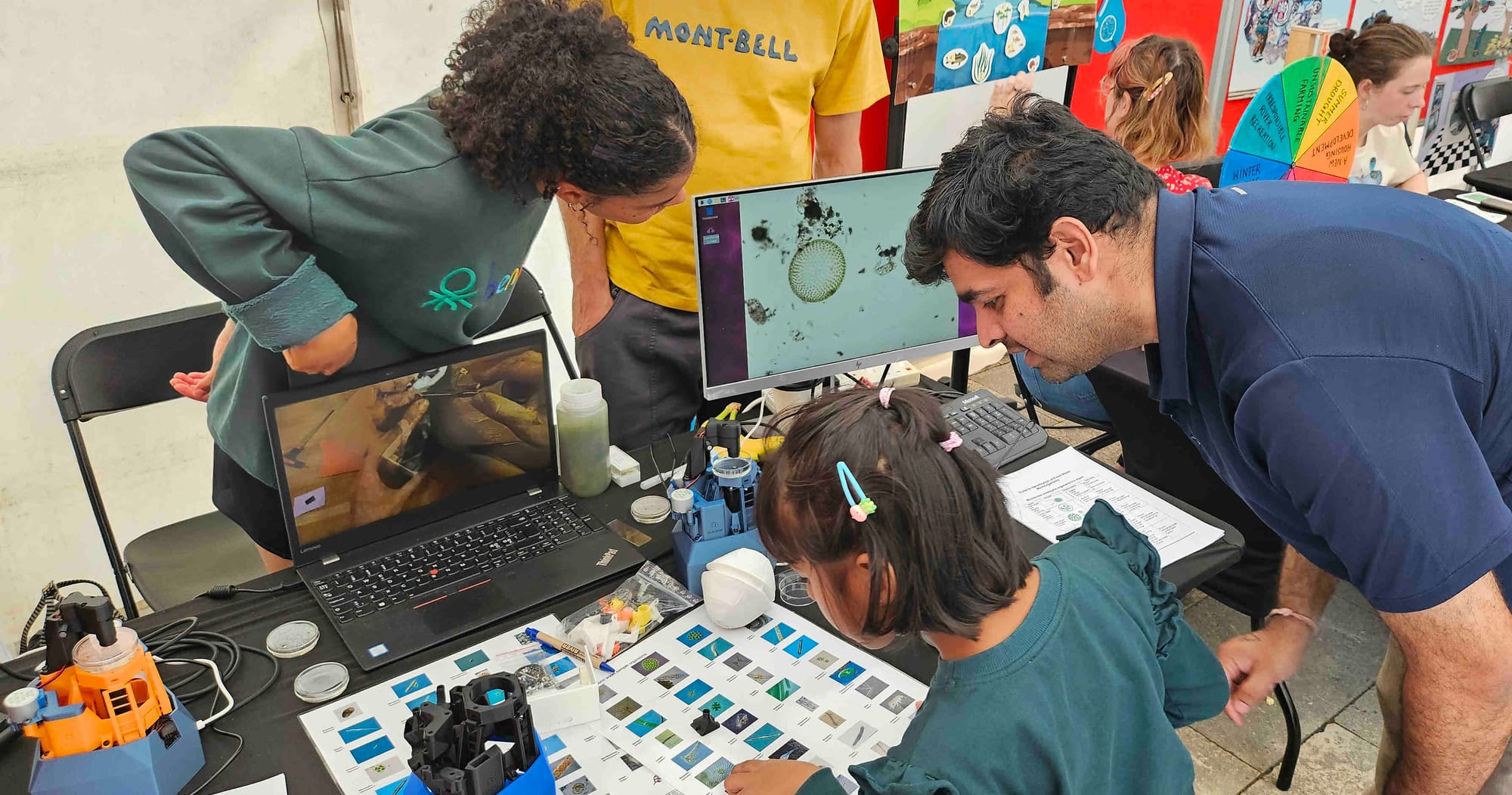
Traditional microscopes only allow for one at the time use, and for some first-time users it can be tricky to orientate the eye pieces to get a clear view. The OFM solves this. By being a digital microscope it can easily be operated via personal computers and mobile devices. This allows for a broader demonstration of what is being put under the microscope. Instead of having to take turns using the eye pieces, teachers and students can now together explore microscopic samples either by looking at an OFM that is being streamed onto a big screen or by sharing computers.
With the OFM you are able to easily capture high quality images of what you are observing. These images can be used in school essays or for the purpose of creating and sharing datasets.
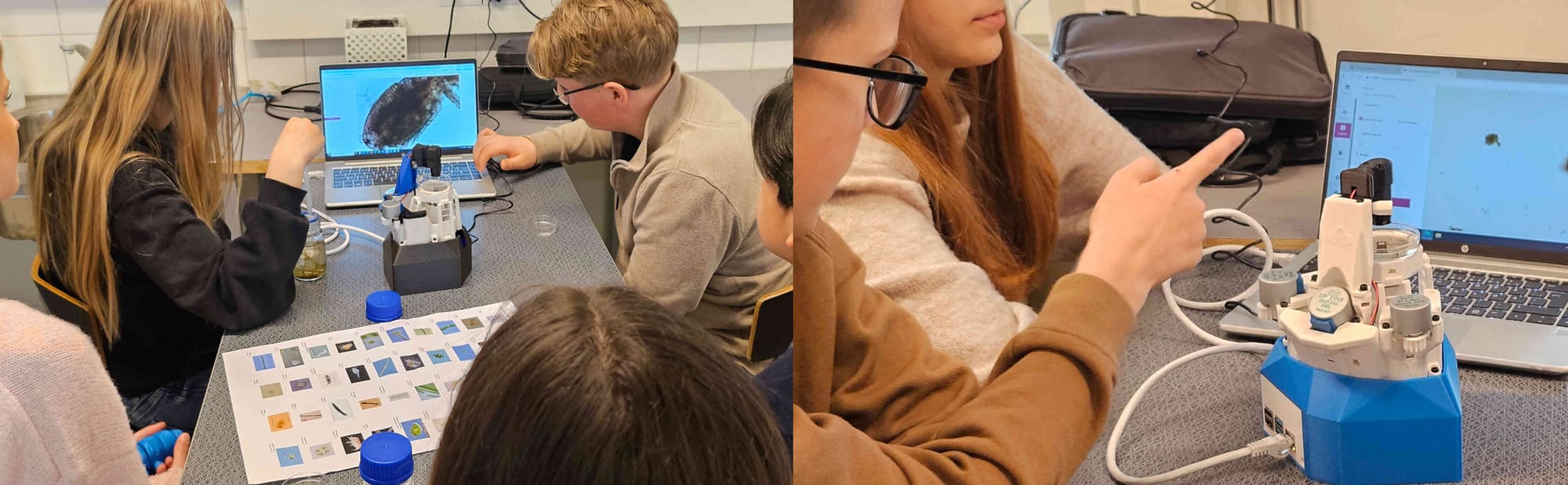
Above, a 7th grade class spent 1 h using five OFMs to explore what is hiding in their local lake. Together the students created a unique dataset that was later uploaded to a national database for environmental monitoring. These datasets contribute with valuable information at a time when our aquatic ecosystems face the challenges of a rapidly changing climate.
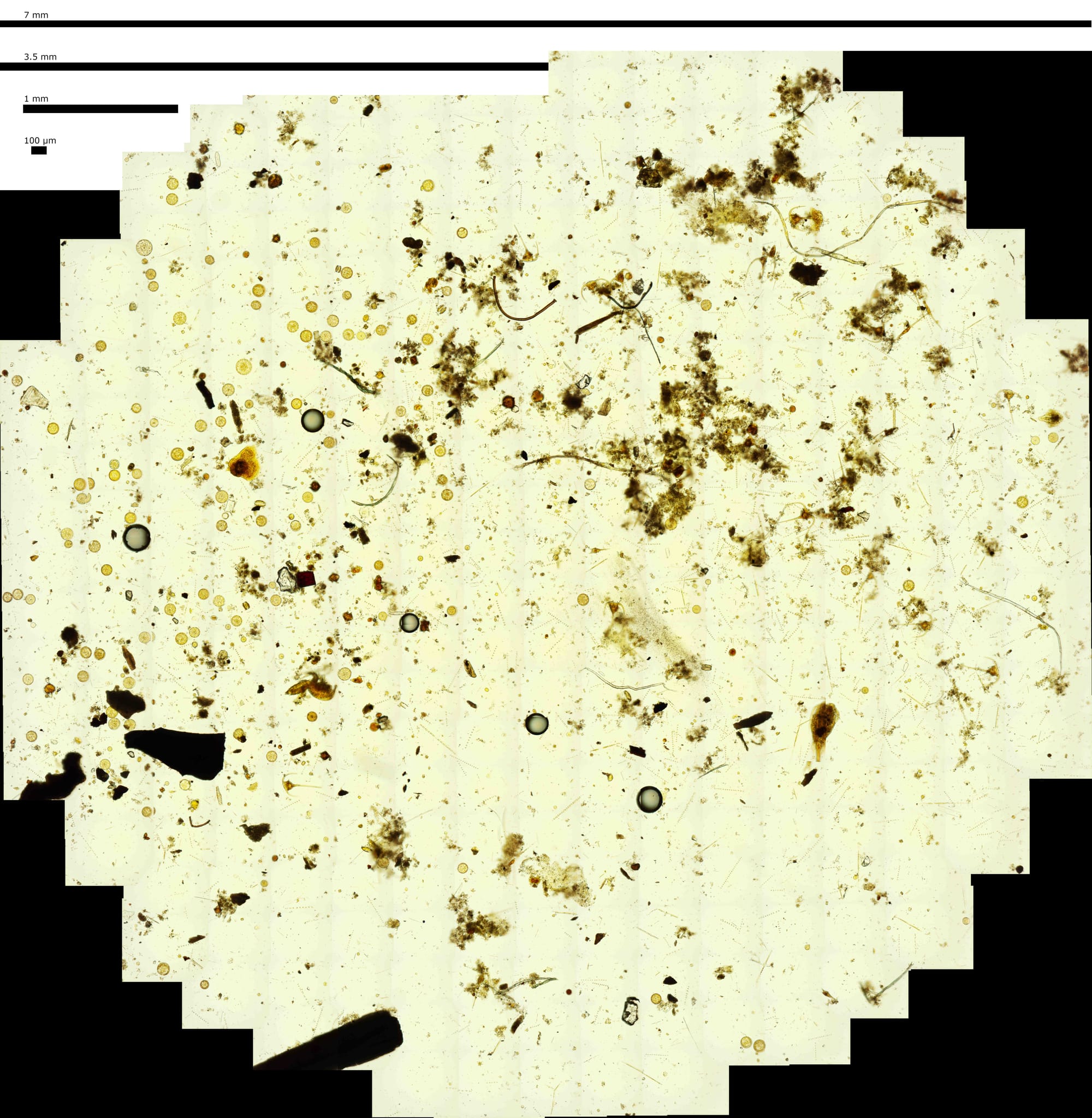
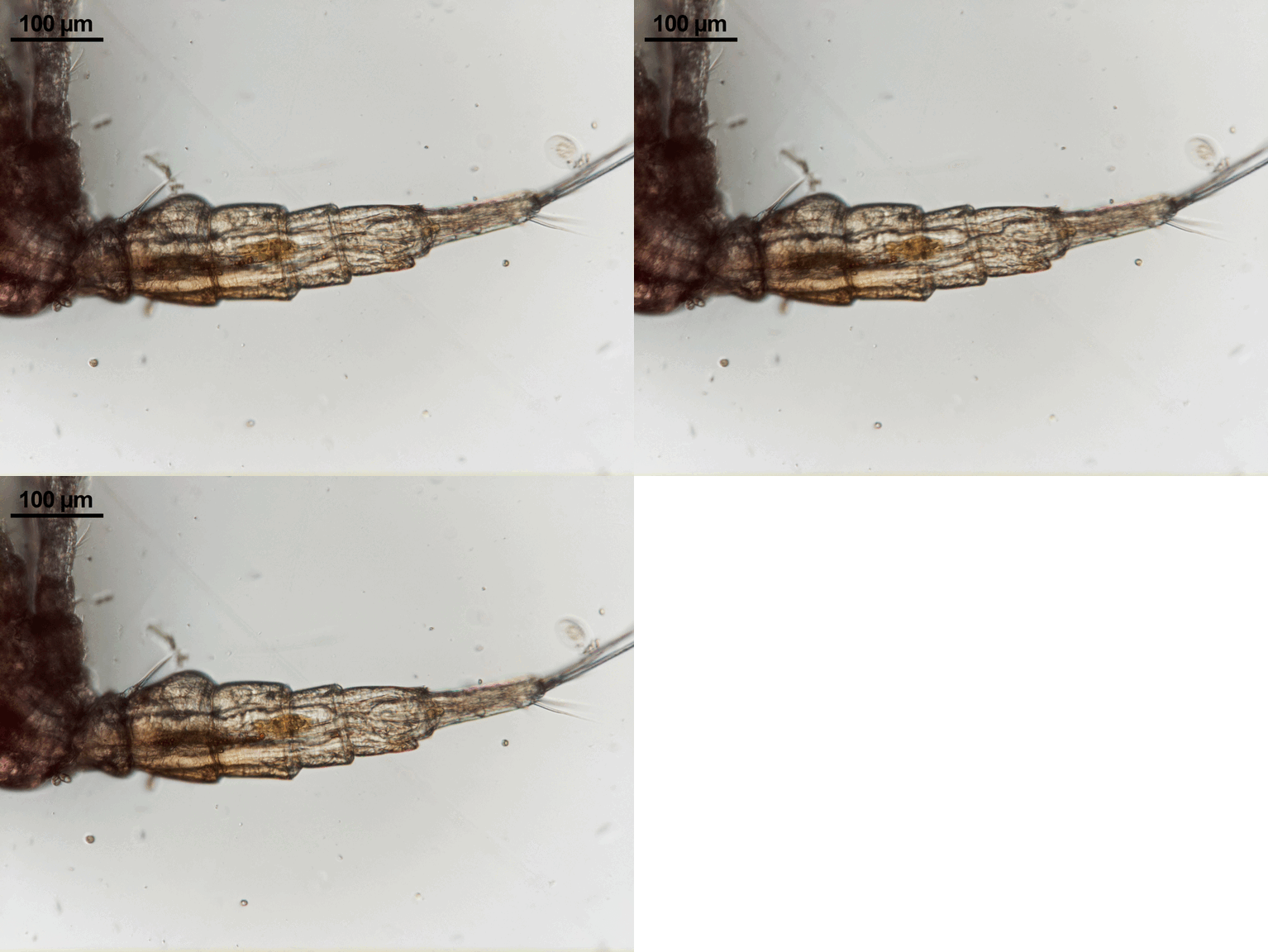
There are also other interesting and engaging media formats you can create, such as using the built in scan feature (using V3 server) to create large image stitches, such as here (below) scanning an aquatic sample collected of the west coast of Sweden.
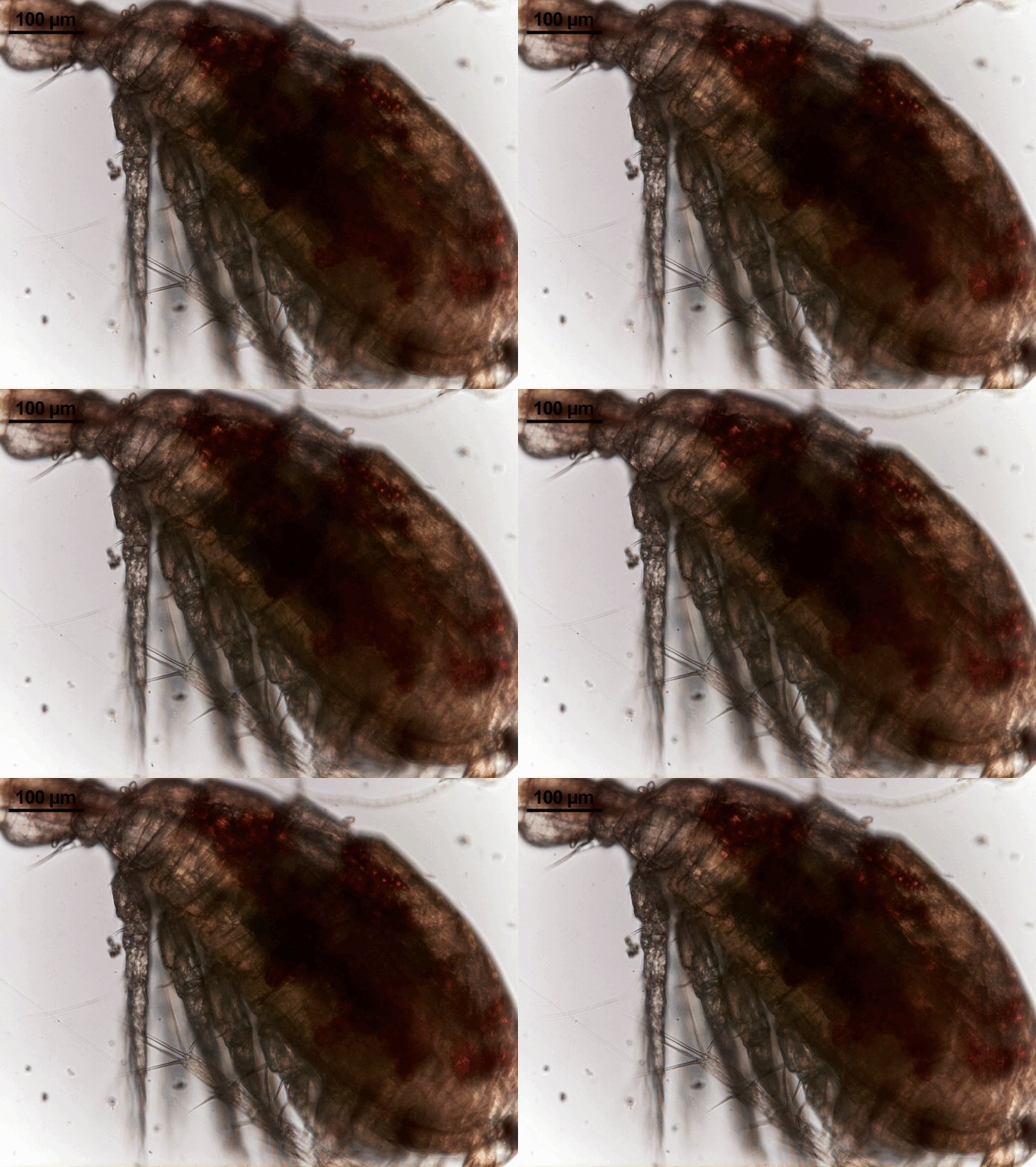
... or combining short series of images into simple GIFs, like here (below) capturing the internal movement of a Copepod.
OFM in educational settings outside of the classroom
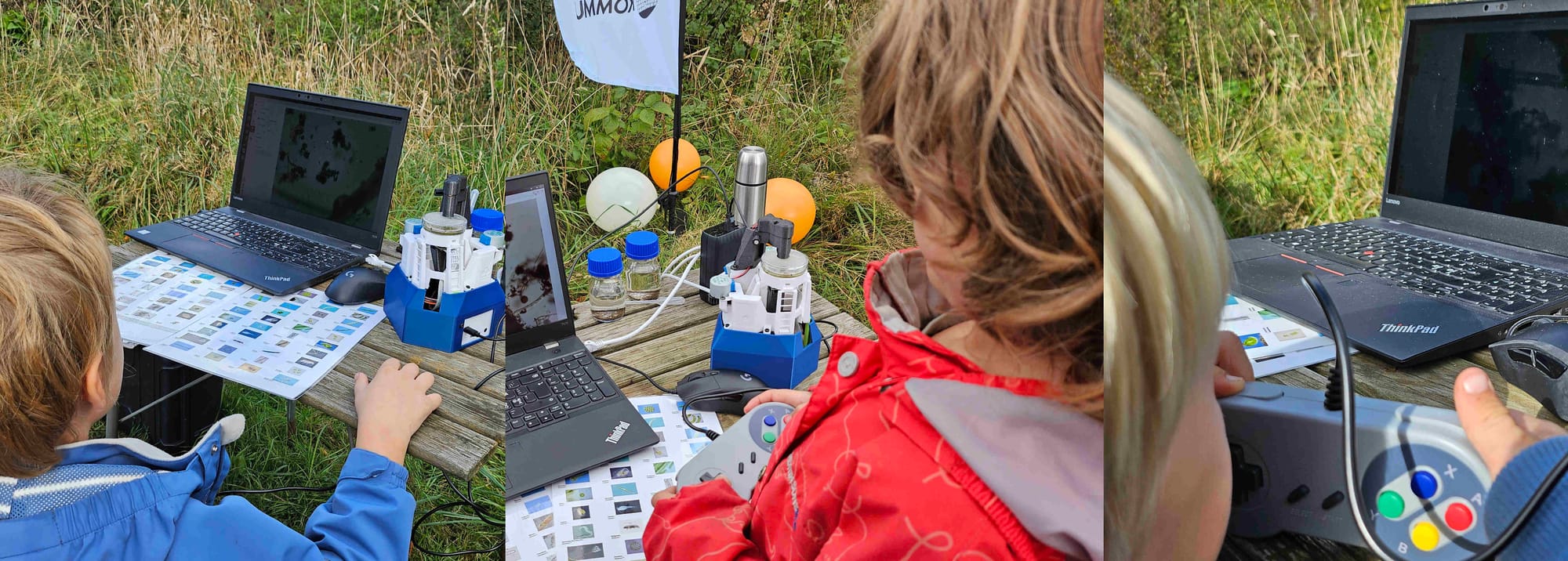
The OFM is easy to bring into the field and use during outdoor educational events. All you need is your microscope, a power source and a display (PC or mobile device).
Here (below), during a water themed outdoor education activity (Tänk H2O!, only in Swedish), participating students were able to (on site!) explore the microscopic life forms of the local water using their laptops and mobile phones. An experience made possible by the OFM!
"Wow! I am surprised by its simplicity and that you can build one yourself"
"it is fascinating how portable and user friendly the microscope is!"
Here (below), during the Biosphere reserve festival 2025 (Storkriket's Hasslemöllafest, only in Swedish) and the Bristol and Bath Festival of Nature 2025, it was possible to live demonstrate the microscopic life forms of the local water to festival visitors, both young and old. All made possible by the OFM!
General reception (so far)
It is a grateful task introducing someone to the OFM. There is a unanimous fascination that a microscope, usually associated with complexity, can be built yourself with relatively simple means. It sparks voiced hope and admiration learning that initiatives like the Humanitarian Technology Trust and OpenFlexure Project exist, democratising science and technology. Seeing how students get captivated using the microscope, I believe, has not only to do with the OFM providing a window to an otherwise unexplored world, but has also much to thank that the instruments design being user friendly and responsive. All teachers and pedagogues express great excitement to have an easy to use instrument that with little effort can be incorporated into their curriculum.
In most of my recent encounters we let the participants (teachers and students) evaluate their experience by filling out a short form. A summary of our user inputs will be presented here, as a new blog post, in the end of the year.
Developing an educational kit box
One of my current focuses is to develop an educational kit box. The kit box will contain instruments and instructions that simplifies sampling, exploring, documenting and sharing findings from aquatic microscopic environments. The aim is that the kit box can be borrowed or passed around between teachers or be made accessible to teachers by being placed at local science centres or library. The aim for the kit box is to be self driven and not requiring any external input or explanations.
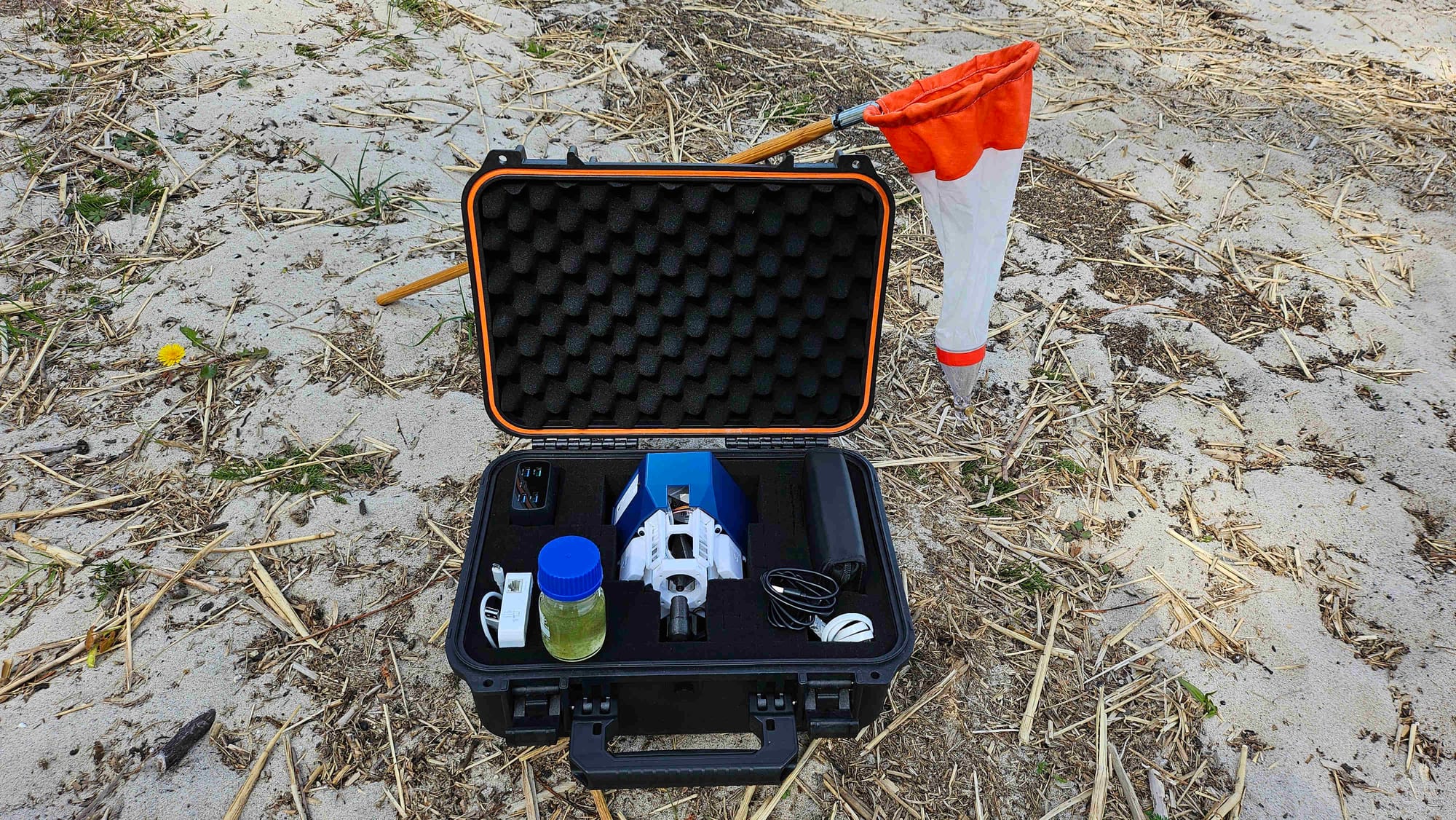
The educational kit box will contain:
- An OpenFlexure microscope (low cost) - Due to the longer working distance (distance between front lens to sample) the low cost variant can be used to look at samples through regular 50 mm petri dishes.
- Power supply
- Ethernet cable (and ethernet to USB adaptor)
- Battery pack (in case of no available power source)
- Wifi module/travel router (pre-configured to work with the microscope in case students/teachers PC’s don’t allow communication over ethernet)
- Toolkit (with simple tools for simple repairs)
- Equipment and material to collect and prepare aquatic samples (plankton net + flasks + pipettes + petri dishes), as well as prepared glass slides.
- Simplified instructions on how to connect to the microscope, navigate it and capture and save images.
- Species lists of common freshwater microorganisms. Currently we have been using a splendid guide list developed by iNaturalist. The plan is to put together a similar species list with images taken by the students using the OFM.
In collaboration with teachers and students we also develop resource material for teachers and students to use and build lectures/exercises around. The goal is so that the teachers and students can couple their observations with information and knowledge regarding the importance of:
- Aquatic ecosystems
- Biodiversity
- Environmental monitoring
- Open-science
- Crowdsourced science and sharing data
All material produced in this project will be made available (in Swedish and English) via my and my collaborators webpage around the end of the project (October 2026). The results of the project will also be summaries here in the form of a new blogpost, hoping to help others interested in using the OFM to study their aquatic surroundings.
The kit box project is partially financed by Water Wise Societies - as part of the Impact Innovation initiative by the Swedish Energy Agency, Vinnova and Formas. You can find more information about Water Wise Societies and the project here.
For more information please contact me at info@pkiutv.se